Navigating The Phoenix Housing Market

Welcome to the official blog of Dominion Group Properties—your trusted resource for real estate news, market analysis, and expert guidance across Phoenix, Scottsdale, North Phoenix, Cave Creek, Carefree, and Anthem. Whether you're a home buyer, seller, investor, or planning a relocation within the Valley, our blog delivers timely content to keep you informed.

What We Cover

  • Local Market Trends & Housing Reports: Stay updated with monthly insights on inventory, pricing, and market shifts in Phoenix and the North Valley.
  • Home Buying & Selling Strategies: From financing manufactured homes to pricing historic properties, our articles cover every step of the process.
  • Community & Development News: Learn about upcoming neighborhoods like Desert Hills, emerging job centers, and how primed areas are shaping investment opportunities.
  • Property Management & Landlord Tips: Make informed decisions whether you're leasing, investing, or managing a residential property in Arizona.

Why Our Blog Stands Out

  • Content anchored in real-world market data and local expertise across Phoenix Metro and surrounding regions.
  • Written and curated by Jonathan Baer—broker, licensed loan officer, and real estate advisor with over 30 years’ experience and $240 million in closed transactions in Maricopa County.
  • Blog topics tailored for actionable insights, whether flipping a home in Cave Creek, planning a move to Anthem, or financing a manufactured home in Phoenix.

Bookmark this page and check back regularly for fresh updates, expert commentary, and smart strategies for navigating Arizona’s dynamic real estate market.

About the Author:
Jonathan Baer, Designated Broker and Real Estate Wealth Advisor at Dominion Group Properties, has completed over 1,000 transactions worth more than $240 million across Arizona.


Learn More About Jonathan Baer

Nov. 30, 2023

Why the Economy Won't Tank the Housing Market

Why the Economy Won’t Tank the Housing Market



If you’re worried about a coming recession, you’re not alone. Over the past couple of years, there’s been a lot of recession talk. And many people worry, if we do have one, it would cause the unemployment rate to skyrocket. Some even fear that a spike in unemployment would lead to a rash of foreclosures similar to what happened 15 years ago.

However, the latest Economic Forecasting Survey from the Wall Street Journal (WSJ) reveals that, for the first time in over a year, less than half (48%) of economists believe a recession will actually occur within the next year:

Economists are turning optimistic on the U.S. economy . . . economists lowered the probability of a recession within the next year, from 54% on average in July to a more optimistic 48%. That is the first time they have put the probability below 50% since the middle of last year.”

If over half of the experts no longer expect a recession within the next year, you might naturally think those same experts also don’t expect the unemployment rate to jump way up – and you’d be right. The graph below uses data from that same WSJ survey to show exactly what the economists project for the unemployment rate over the next three years (see graph below):
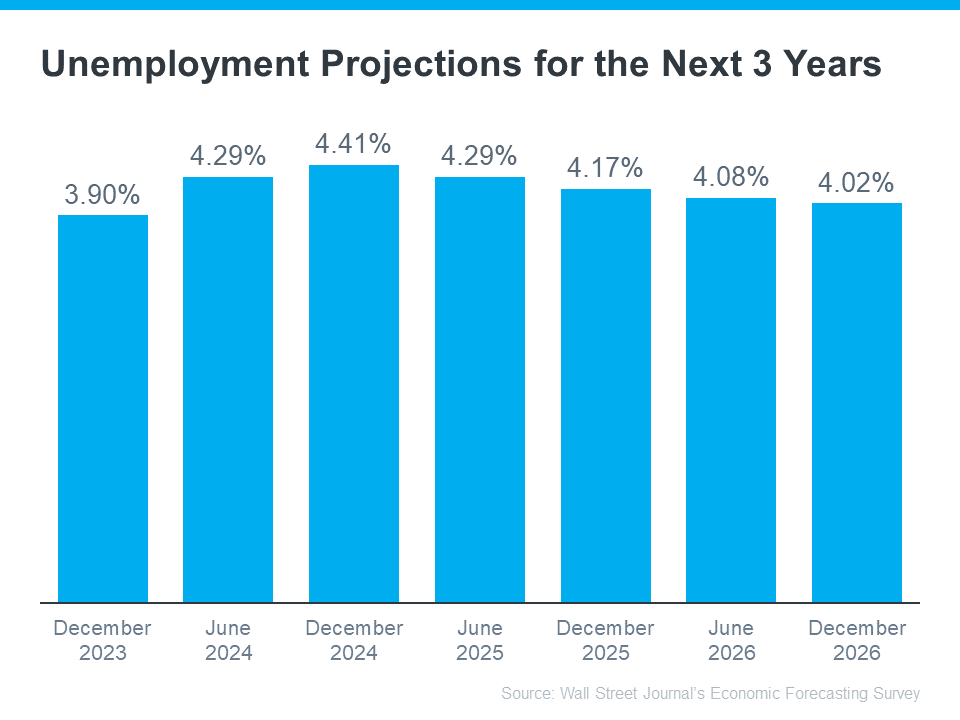
 

If those expert projections are correct, more people will lose their jobs in the upcoming year. And job losses of any kind are devastating for those people and their loved ones.

However, the question here is: will there be enough job losses to cause a wave of foreclosures that will crash the housing market? Based on historical context from Macrotrends and the Bureau of Labor Statistics (BLS), the answer is no. That’s because the unemployment rate is currently near all-time lows (see graph below):
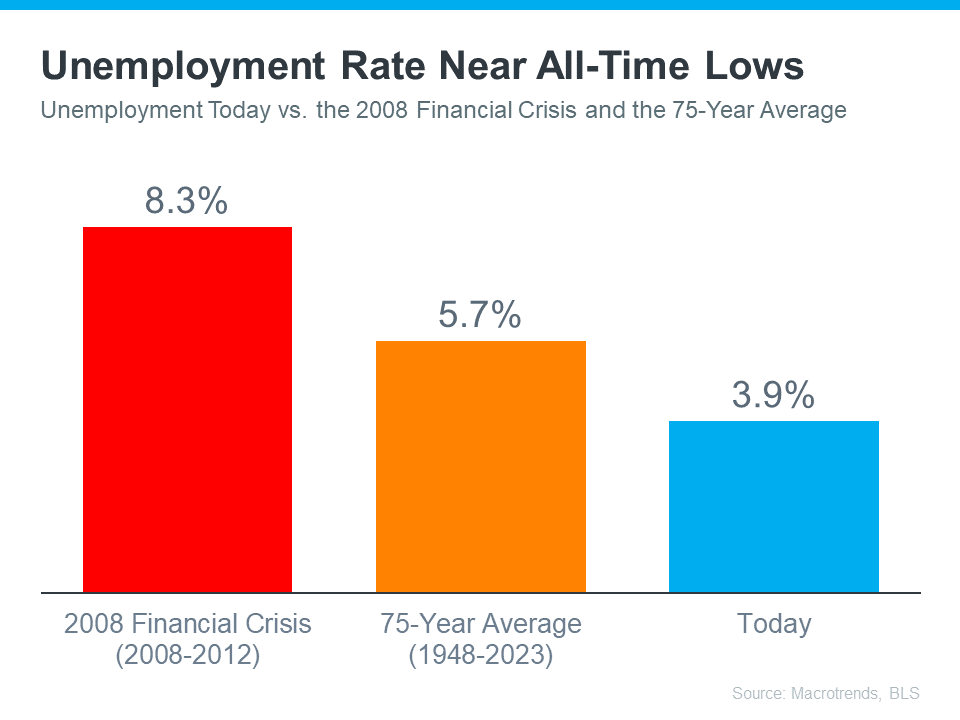
 

As the orange bar in the graph shows, the average unemployment rate dating back to 1948 is 5.7%. The red bar shows, the last time the housing market crashed, in the immediate aftermath of the 2008 financial crisis, the average unemployment rate was up to 8.3%. Both of those bars are much higher than the unemployment rate today (shown in the blue bar).

Moving forward, projections show the unemployment rate is likely to stay beneath the 75-year average. And that means we won’t see a wave of foreclosures that would severely impact the housing market.

Bottom Line

Most economists no longer expect a recession to occur in the next 12 months. That’s why they also don’t expect a dramatic rise in the unemployment rate that would lead to a rash of foreclosures and another housing market crash. If you have questions about unemployment and its impact on the housing market, let’s connect.

Posted in Market Updates
Nov. 29, 2023

Maricopa County Title Alerts Register Your Property

Don’t forget to register for FREE ALRTS when someone uses your name in a recorded document with the Maricopa County Recorder’s office. Maricopa Title Alert monitors documents recorded with the Maricopa County Recorder’s office and alerts subscribers. This program will notify participating subscribers by email when a document is recorded in a specific individual’s name and/or business name. This service applies only to documents recorded after sign up. Users may unsubscribe or make updates to this service at any time. Maintaining a current email for notification shall be the sole responsibility of the subscriber.

This free service does not constitute a liability on the part of the Maricopa County Recorder’s office. Email addresses and names used for the Maricopa Title Alert are subject to public disclosure per Arizona Revised Statute Title 39.  The link to sign up is https://recorder.maricopa.gov/

Posted in Market Updates
Nov. 29, 2023

Sell Your Home During the Holidays?

Is Your House the Top Thing on a Buyer’s Wish List this Holiday Season?


This time every year, homeowners who are planning to move have a decision to make: sell now or wait until after the holidays? Some sellers with homes already on the market may even remove their listing until the new year.

But the truth is, many buyers want to purchase a home for the holidays, and your house might be just what they’re looking for. As an article from Fortune Builders explains:

“ . . . while a majority of people take a step back from the real estate market during the holiday months, you may find when the temperature drops, your potential for a great real estate deal starts to rise.”

To help prove that point, here are four reasons you shouldn’t wait to sell your house.

1. The desire to own a home doesn’t stop during the holidays. While a few buyers might opt to delay their moving plans until January, others may need to move now because something in their life has changed. The buyers who look for homes at this time of year are usually motivated to make their move happen and are eager to buy. A recent article from Investopedia says:

“Anyone shopping for a new home between Thanksgiving and New Year’s is likely going to be a serious buyer. Putting your home on the market at this time of year and attracting a serious buyer can often result in a quicker sale.”

2. While the supply of homes for sale has increased a little bit lately, overall inventory is still lower than it was before the pandemic. What does that mean for you? If you work with an agent to price your house at market value, it could still sell quickly because today’s buyers are craving more options – and your home may be exactly what they’re searching for.

3. You can determine the days and times that are most convenient for you for home showings. That can help you minimize disruptions to your own schedule, which can be especially important during this busy time of year. Plus, you may find buyers are more flexible on when they’ll tour a house this time of year because they have more time off from work around the holidays.

4. And finally, homes decorated for the holidays appeal to many buyers. For those buyers, it’s easy to picture gathering with their loved ones in the home and making memories of their own. An article on selling at this time of year offers this advice:

“If you’re selling around a holiday and have decorations up, make sure they accent—not overpower—a room. Less is more.

Bottom Line

There are plenty of good reasons to put your house on the market during the holiday season. Let's chat and see if it's the right time for you to sell.

Posted in Home Selling
Nov. 29, 2023

Is Wall Street Buying Up All the Homes

Is Wall Street Buying Up All the Homes in America?


If you’re thinking about buying a home, you may find yourself interested in the latest real estate headlines so you can have a pulse on all of the things that could impact your decision. If that’s the case, you’ve probably heard mention of investors, and wondered how they’re impacting the housing market right now. That could leave you asking yourself questions like:

  • How many homes do investors own?
  • Are institutional investors, like large Wall Street Firms, really buying up so many homes that the average person can’t find one?

To answer those questions, here’s the real story of what’s happening based on the data.  

Let’s start with establishing how many single-family homes (SFHs) there are and what portion of those are rentals owned by investors. According to SFR Investor, which studies the single-family rental market in the United States, there are eighty-two million single-family homes in this country. But how many of them are actually rentals?

According to data shared in a recent post, sixty-eight million (82.93%) of those homes are owner-occupied – meaning the person who owns the home lives in it. If you subtract that sixty-eight million from the total number of single-family homes (82 million), that leaves just about fourteen million homes left that are single-family rentals (SFRs).

Do institutional investors own all of those remaining fourteen million homes? Not even close. Let’s take it one step further. There are four categories of investors:

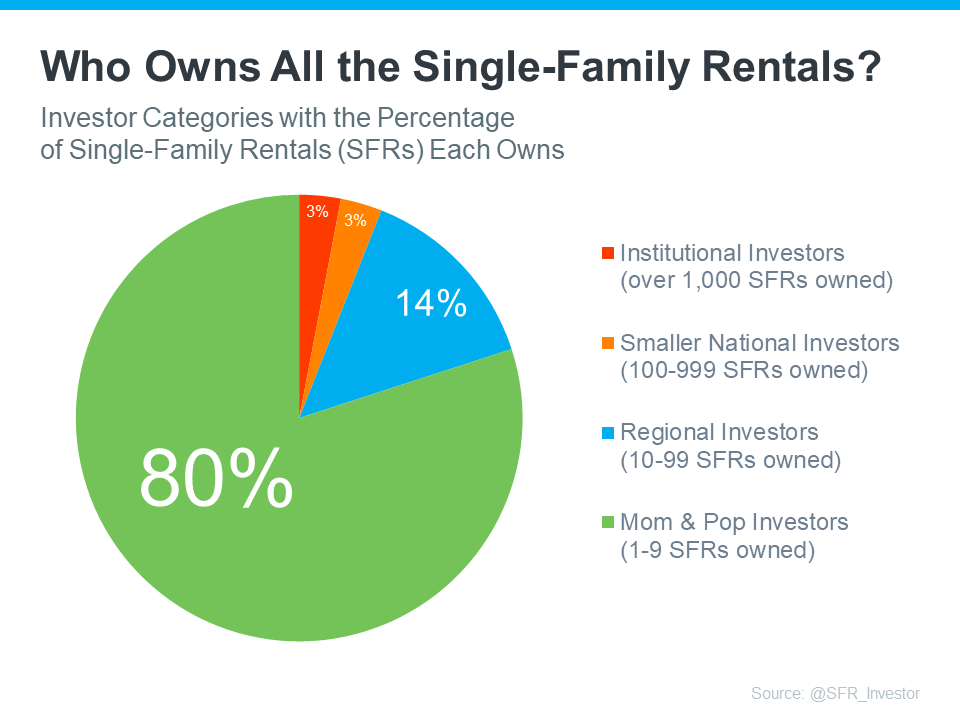
  • The mom & pop investor who owns between 1-9 SFRs
  • The regional investor who owns between 10-99 SFRs
  • Smaller national investor who owns between 100-999 SFRs
  • The institutional investor who owns over 1,000 SFRs

These categories show that not all investors are large institutional investors. To help convey that even more clearly, here are the percentages of rental homes owned by each type of investor (see chart below):


As you can see in the chart, despite what the news and social media would have you believe, the green shows the vast majority are not owned by large institutional investors. Instead, most are owned by small mom & pop investors, like your friends and neighbors.

What’s actually happening is, that there are people out there, just like you, who believe in homeownership, and they view buying a home (or a second home) as an investment. Maybe they saw an opportunity to buy a second home over the last few years to use it as a rental and generate additional income. Or maybe they just decided to keep their first house rather than sell it when they moved up.

So, don’t believe everything you read or hear about institutional investors. They aren’t buying up all the homes and making it impossible for the average person to buy. That’s just not what the numbers show. Institutional investors are actually the smallest piece of the pie chart.

Bottom Line

While it’s true that institutional investors are a player in the single-family rental marketplace, they’re not buying up all of the houses on the market. If you have other questions about things you’re hearing about the housing market, let’s connect so you have an expert to give you the context you need.

Nov. 17, 2023

2024 Housing Forecast Phoenix Arizona

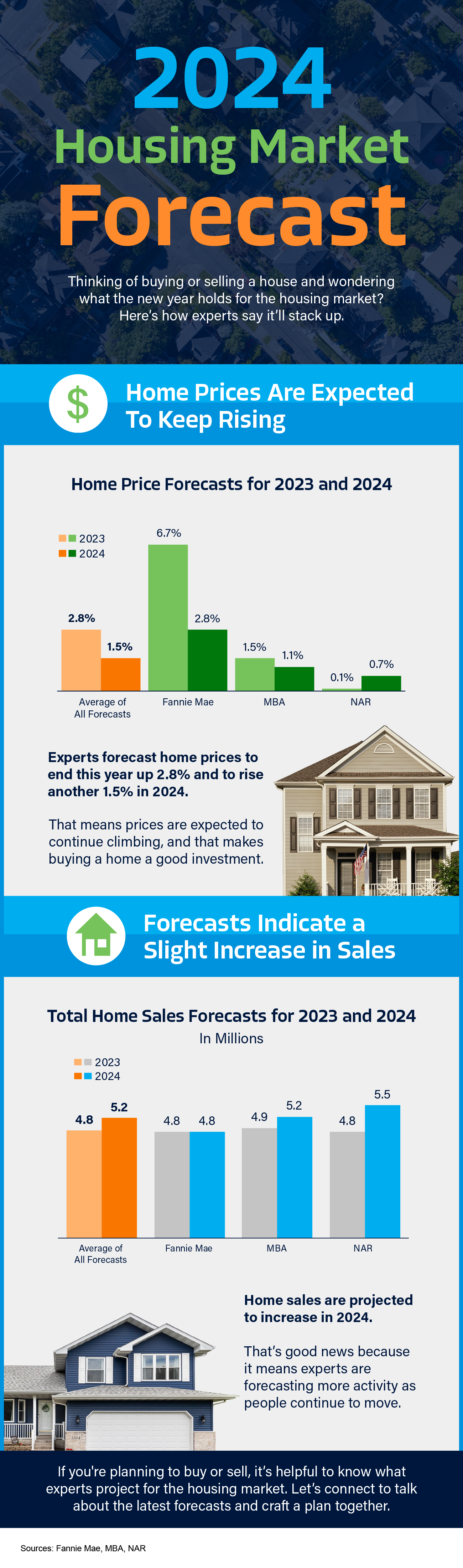
2024 Housing Market Forecast [INFOGRAPHIC]


Some Highlights

Posted in Market Updates