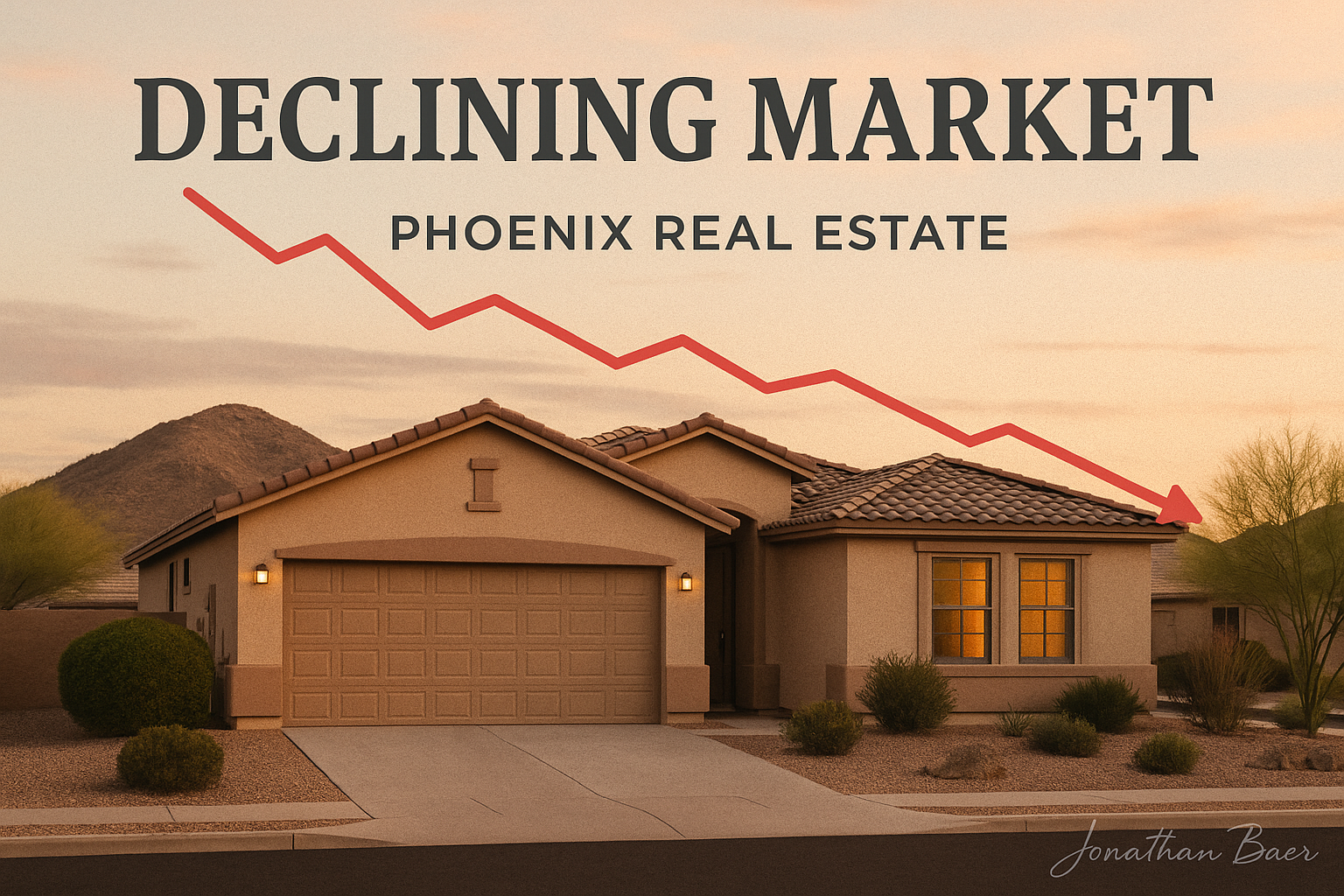
What a Declining Market Really Means for Phoenix Homeowners and Buyers
By Jonathan Baer | Dominion Group Properties
Every real estate cycle tells a story. Sometimes it’s a story of explosive growth and multiple offers, and other times it’s a story of hesitation, longer days on market, and price adjustments. In today’s Phoenix housing market, we’re starting to see the early signs of what’s known as a “declining market.” But what exactly does that mean—and why should it matter to you as a homeowner, buyer, or investor?
Defining a Declining Market
In the simplest terms, a declining market is when home prices in a specific area begin to trend downward. This can be gradual—starting with increased inventory and slower buyer activity—or more dramatic, often driven by rising interest rates, economic uncertainty, or affordability pressures.
In real estate appraisals, this term carries real weight. When an appraiser marks “Declining Market” on an appraisal report, it doesn’t just describe the trend—it changes how the value is interpreted. Appraisers are required to make market-based adjustments to ensure that values reflect current (not past) conditions. Even if comparable sales—known as “comps”—support a certain price, the appraiser may reduce the appraised value based on the overall market trajectory.
My Experience During the Last Declining Market: 2008
I’ll never forget what it felt like during the 2008 financial crisis. At the time, I was working through deals that seemed solid—buyers and sellers had agreed on prices, appraisers had solid comps, and everyone was ready to close. But then the market started shifting fast.
Suddenly, appraisers began checking the “declining market” box on their reports. That one small mark had a massive impact. Even though the comps supported the contract price, the appraisal values came in lower—sometimes by thousands of dollars. The appraisers weren’t wrong; they were reacting to the downward pressure in pricing that was spreading across the Phoenix metro area.
This often led to last-minute chaos. A deal that was ready to close on Friday could suddenly be in jeopardy on Wednesday. We’d find ourselves renegotiating terms just days before escrow closed—buyers scrambling to bring in more cash, and sellers forced to reduce their price just to keep the deal alive.
For many, it was a stressful, emotional experience. But it also taught a powerful lesson about what happens when the market turns—and how quickly confidence can evaporate once the term “declining market” starts appearing in reports and listings.
The Impact on Sellers and Buyers
For Sellers:
In a declining market, pricing is everything. When prices begin to slip, the worst thing a seller can do is hold out for “just a little more.” I’ve seen it time and again—homes that start out overpriced sit longer, gather dust on the MLS, and end up chasing the market down. By the time the seller makes a significant reduction, buyers have already moved on, and the final sale price ends up lower than if it had been priced correctly from the start.
I call it the “toilet bowl effect”—the longer you swirl around the market without selling, the faster you go down in value. When buyers see repeated price drops, they assume something’s wrong with the property—or they wait for the next reduction. Momentum matters, and once you lose it, it’s hard to regain.
For Buyers:
In a declining market, buyers can feel like they’re gaining power—and to some extent, they are. But this isn’t the time to get careless. A lower price today doesn’t mean your home will hold value tomorrow. If the appraiser marks “declining market,” your loan could be affected, requiring a larger down payment or changing your loan-to-value ratio.
Are We on the Cusp of Another Declining Market in Phoenix?
While today’s Phoenix real estate market isn’t collapsing like it did in 2008, we are beginning to see inventory rise and buyer demand slow—especially in Cave Creek, Desert Hills, and North Scottsdale. When you combine that with higher mortgage rates and increased seller competition, you have the early ingredients of a softening market.
Data from ARMLS and The Cromford Report both show subtle shifts: longer days on market, more price reductions, and a flattening of appreciation. These are early warning signs of a market transition.
How to Protect Your Home Value in a Declining Market
- Price with precision: Don’t list at yesterday’s comps—list at today’s reality.
- Stay informed: Follow Maricopa County market reports.
- Be flexible: If your home isn’t getting activity, adjust early.
- Work with experience: An agent who’s been through a declining market (like I have) can help you avoid major pitfalls.
Final Takeaway
A declining market doesn’t mean the sky is falling—it means the market is correcting. If you’re selling, don’t be greedy. Price right, stay informed, and aim to sell within the first 30 days. If you’re buying, be smart and prepared for appraisal fluctuations.
Ready to Make Your Move?
Looking to buy or sell in Phoenix, Cave Creek, or Scottsdale? Let’s talk strategy before the market shifts further. Together, we’ll make sure your next move is a smart one.
Contact Jonathan Baer at Dominion Group Properties today.