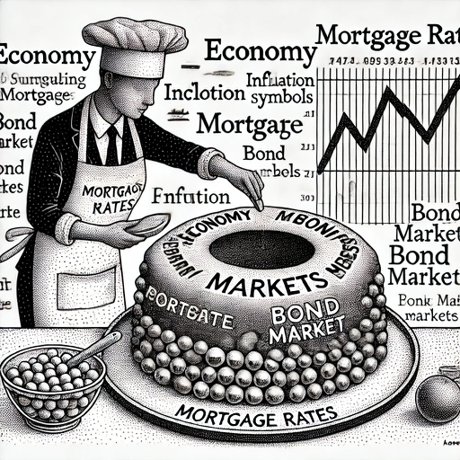
What Determines Mortgage Rates? Spoiler: It's Not the Fed (Surprise!)
Ah, mortgage rates. Those little numbers that can make or break your dream of homeownership, right? You might be thinking, "Well, the Federal Reserve is probably to blame for the rate I’m seeing, isn’t it?" While it might be fun to blame the Fed for all your woes, unfortunately, that’s not how this whole mortgage rate thing works. So, let’s take a deep dive into what actually drives those rates and why your friendly neighborhood Fed isn’t the root cause of your financial headaches.
1. The Economy (Not Just the Fed)
Yes, the broader economy is a huge player when it comes to mortgage rates. It’s like saying the weather affects your mood; the economy’s ups and downs play a big part in where rates land. If the economy is humming along nicely—low unemployment, strong growth, people spending money—the demand for loans can increase. That means mortgage rates might rise to help slow things down a bit (we don’t want the economy overheating now, do we?).
On the flip side, if the economy is struggling, say there’s a recession or consumers aren’t buying as much, the Fed might cut rates to encourage more borrowing. But guess what? That’s just one factor in a much bigger picture.
2. Inflation: That Pesky Beast
The real culprit behind mortgage rates (and probably your student loans, credit cards, and that overpriced latte you just bought) is inflation. When inflation is high, the purchasing power of your money decreases, and lenders are less keen to hand out loans. To combat that, they raise interest rates to make borrowing more expensive. That means mortgage rates go up because lenders need to stay competitive and ensure they get a good return on their money.
So, no, it’s not just the Fed raising rates because they’re bored—it's the economy telling everyone, “Hey, slow down, you’re spending too much.”
3. The Bond Market (Where the Magic Really Happens)
Okay, now we get to the secret sauce. The bond market is the real behind-the-scenes player when it comes to mortgage rates. Specifically, when you hear about "10-year Treasury notes" and "government bonds," you’re hearing about what investors are willing to pay for those bonds.
When bond prices go up, mortgage rates go down. Why? Because bond yields (what investors earn) move in the opposite direction of bond prices. If bonds become more attractive to investors, they buy more, which pushes rates down, and vice versa. It’s all about supply and demand—and guess what? The Fed doesn’t have control over the global bond market.
4. Your Personal Creditworthiness (Yes, You!)
Okay, now that we’ve tackled the economy and the bond market, let’s talk about you, the borrower. Mortgage rates are also affected by your personal credit profile. If your credit score is stellar, you’ll probably get a lower rate because lenders see you as less risky. If your score is in the dumps, well, prepare for a higher rate—because lenders are going to charge you more for the privilege of borrowing their money.
So, despite the headline-grabbing headlines about "Fed raises rates," your creditworthiness and how you manage your debt can be the deciding factor for your mortgage rate.
5. Global Factors (Because, Why Not?)
Let’s not forget about the global market. Yes, we live in a global economy, and mortgage rates in the U.S. can be affected by what happens overseas. When things go south in other countries, investors often flock to safer investments like U.S. Treasury bonds, which pushes yields down and, consequently, mortgage rates lower.
It’s a crazy interconnected world out there, and it turns out, the Fed’s power is just one small cog in a much larger machine.
6. The Fed's Role (Surprise, It’s Smaller Than You Think)
Now, here’s the part where we admit the Fed does play a role—but it’s not as big as you might think. Yes, they set short-term interest rates, which can have an indirect effect on longer-term mortgage rates. However, as we’ve seen, mortgage rates are influenced by so many factors—economic growth, inflation, the bond market—that the Fed’s influence is just one piece of the puzzle.
So, no, if you’re sitting around waiting for the Fed to save the day and magically lower your mortgage rate, you’re going to be in for a long wait.
In Conclusion: It's Not the Fed (Honestly)
In short, mortgage rates are driven by a mix of economic factors, inflation, the bond market, and—yes—your personal credit history. The Fed is just one piece of this intricate puzzle, and it's not the one holding the magic key to lower rates. So, next time you hear someone blame the Fed for their mortgage woes, just know that there’s a much bigger financial dance going on behind the scenes—and the Fed is just doing the cha-cha on the sidelines.
Mortgage rates are what they are because of a million things happening at once. And while we may not have control over all of them, understanding the key players in this game can help you make smarter decisions.