Navigating The Phoenix Housing Market

Welcome to the official blog of Dominion Group Properties—your trusted resource for real estate news, market analysis, and expert guidance across Phoenix, Scottsdale, North Phoenix, Cave Creek, Carefree, and Anthem. Whether you're a home buyer, seller, investor, or planning a relocation within the Valley, our blog delivers timely content to keep you informed.

What We Cover

  • Local Market Trends & Housing Reports: Stay updated with monthly insights on inventory, pricing, and market shifts in Phoenix and the North Valley.
  • Home Buying & Selling Strategies: From financing manufactured homes to pricing historic properties, our articles cover every step of the process.
  • Community & Development News: Learn about upcoming neighborhoods like Desert Hills, emerging job centers, and how primed areas are shaping investment opportunities.
  • Property Management & Landlord Tips: Make informed decisions whether you're leasing, investing, or managing a residential property in Arizona.

Why Our Blog Stands Out

  • Content anchored in real-world market data and local expertise across Phoenix Metro and surrounding regions.
  • Written and curated by Jonathan Baer—broker, licensed loan officer, and real estate advisor with over 30 years’ experience and $240 million in closed transactions in Maricopa County.
  • Blog topics tailored for actionable insights, whether flipping a home in Cave Creek, planning a move to Anthem, or financing a manufactured home in Phoenix.

Bookmark this page and check back regularly for fresh updates, expert commentary, and smart strategies for navigating Arizona’s dynamic real estate market.

About the Author:
Jonathan Baer, Designated Broker and Real Estate Wealth Advisor at Dominion Group Properties, has completed over 1,000 transactions worth more than $240 million across Arizona.


Learn More About Jonathan Baer

Dec. 18, 2024

Does property management require license?

Does Property Management Require a License in Arizona?


Does Property Management Require a License in Arizona?

Summary:

In Arizona, property management is regulated by the Arizona Department of Real Estate (ADRE). A property management company must have a real estate license to legally operate. This is essential for anyone involved in leasing, managing, and handling transactions related to rental properties. Whether you're looking to hire a property management company or considering entering the field, it's important to understand the licensing requirements to ensure compliance with state regulations.


Does Property Management Require a License in Arizona?

Property management is an essential aspect of the real estate industry, and Arizona is no exception when it comes to regulating this business. If you're considering starting a property management business or hiring a property management company, one key factor to keep in mind is whether a real estate license is required. In Arizona, the answer is clear: yes, property management companies must hold a real estate license issued by the Arizona Department of Real Estate (ADRE).

Why is a Real Estate License Required for Property Management in Arizona?

The state of Arizona defines property management as a practice that includes various responsibilities, such as leasing, collecting rents, negotiating leases, and managing tenant relations. These tasks are considered real estate activities under state law, and to legally perform them, a person or company must be licensed by ADRE. This ensures that individuals in the property management field are trained and knowledgeable about state laws and regulations related to real estate transactions.

According to the ADRE, property managers handle real estate transactions and often act on behalf of the property owner in leasing and management matters. Without a real estate license, an individual or company cannot legally perform these functions. Whether it’s a residential or commercial property, having a licensed professional ensures that the landlord or property owner remains in compliance with Arizona’s laws.

What Does a Real Estate License Cover in Property Management?

In Arizona, a real estate license for property management covers a wide range of services, including:

  • Leasing and Rent Collection: A licensed property manager is authorized to show properties, negotiate leases, and collect rent payments from tenants.
  • Tenant Screening: Property managers conduct background checks, credit screenings, and other due diligence tasks to find qualified tenants.
  • Maintenance Oversight: They may also coordinate maintenance and repairs on the property, ensuring that tenants’ needs are met and that the property stays in good condition.
  • Evictions: If necessary, a licensed property manager can manage the eviction process legally, ensuring all steps are taken in accordance with Arizona law.
  • Compliance with Laws: Property managers must follow all state and local laws governing landlord-tenant relationships, including those related to security deposits, lease terms, and property maintenance.

How to Get a Real Estate License for Property Management in Arizona

To become licensed as a property manager in Arizona, an individual must first complete the necessary education and training. The following are the key steps:

  1. Complete Pre-Licensing Education: Applicants must complete 90 hours of state-approved pre-licensing education, which covers real estate principles, laws, and regulations.
  2. Pass the State Exam: After completing the education, the candidate must pass the Arizona real estate licensing exam.
  3. Submit an Application to ADRE: Upon passing the exam, an application for a real estate license must be submitted to the ADRE, including fingerprinting for a background check.
  4. Continue Education: After receiving the license, property managers must fulfill continuing education requirements to maintain their license, ensuring they stay up-to-date with any changes in real estate laws and regulations.

Consequences of Operating Without a License

Operating a property management company without the appropriate license can have serious consequences. The ADRE may issue fines or penalties, and individuals caught managing properties without a license could face legal issues, including potential lawsuits from clients or tenants. Moreover, unlicensed property managers may not be equipped with the knowledge necessary to navigate the complex world of real estate laws, which can lead to costly mistakes.

Conclusion

If you’re involved in property management in Arizona or plan to hire a property management company, it’s critical to ensure that they hold a valid real estate license issued by the Arizona Department of Real Estate (ADRE). This license not only ensures that your property is managed in compliance with state laws but also guarantees that you’re working with a professional who has the expertise and legal standing to perform necessary tasks.

For more information on licensing requirements, you can visit the Arizona Department of Real Estate (ADRE) website.

By hiring a licensed property manager, you can have peace of mind knowing that your property is in capable and legally compliant hands.


Dominion Group Properties: Your Licensed Property Management Partner in Arizona

At Dominion Group Properties, we are proud to be a fully licensed property management company in the state of Arizona. Specializing in residential real estate, our team of experienced and licensed property managers is dedicated to providing comprehensive services to ensure your property is managed efficiently and in full compliance with state regulations.

With a focus on customer satisfaction, we handle all aspects of property management, from leasing and tenant screenings to maintenance and rent collection. Our goal is to protect and grow your real estate investment while relieving you of the day-to-day responsibilities of managing rental properties.

Whether you are a first-time property owner or a seasoned investor, Dominion Group Properties offers professional, reliable, and transparent property management services tailored to meet your specific needs.

To learn more about how we can assist with your property management needs, contact us today or visit Dominion Group Properties.

Dec. 12, 2024

Navigating the Phoenix Housing Market: December 2024

Navigating the Phoenix Housing Market: December 2024

Navigating the Phoenix Housing Market: December 2024

As we close out 2024, the Phoenix housing market is showing a mix of stability and subtle shifts. While active listings are on the rise, demand is holding steady, and prices are showing slight fluctuations. Whether you're a homebuyer, seller, or investor, here's a breakdown of the current trends and what they mean for you.

Active Listings: More Choices for Buyers

Active listings in the Phoenix market are up significantly compared to last year, indicating that buyers have more options available. As of December 1, 2024, there were 21,593 active listings (excluding Under Contract and CCBS), a 35% increase from last year, and a modest 1.1% rise from last month. Including Under Contract and CCBS listings, the total is 24,178, up 34% from last year and slightly up by 0.2% compared to November.

This increase in available inventory is good news for buyers who have been experiencing a competitive market. However, this trend is expected to follow a seasonal pattern, with the number of listings typically decreasing in the coming weeks through January. From a seller's perspective, this uptick in inventory still represents an improvement compared to last year's market.

Pending and Under Contract Listings: Demand Shows Some Signs of Life

Pending listings, which represent homes that are under contract but not yet closed, remain relatively stable compared to last year, with 3,808 pending as of December 1, 2024, up 0.3% from 2023. However, pending listings have decreased by 8.8% from last month, which could signal some softening in demand as we move into the winter months.

Overall, the number of homes under contract (including pending, CCBS, and UCB listings) is up 9% from last year at 6,393, but it has dropped 7.8% from last month. Despite these drops, the fact that demand is still showing positive year-over-year growth is encouraging.

Monthly Sales: A Positive Sign for Buyers

In terms of monthly sales, there’s some good news. While sales are down 12% from November 2024, they are up 11% from last year. November 2024 saw 5,139 sales compared to 4,629 in November 2023. This increase in sales is a positive sign that demand is no longer declining, which has been a concern throughout the year. Additionally, the annual sales rate has started to creep up from the low of 69,527 homes sold at the end of September to around 71,000 in December. While this is still lower than normal, the upward trend is a good indicator of a slow recovery in demand.

Price Trends: Stability in a Challenging Market

As for pricing, the monthly average sales price per square foot has remained relatively stable at $289.69, up just 0.2% from last year. This marks a slight decrease of 0.3% from last month, indicating that there’s little upward pressure on prices in the overall market.

The median sales price in December is holding steady at $450,000, unchanged from last month and up 2.5% from $439,000 in December 2023. The stable pricing suggests that there’s not much competition driving up prices, though this could change depending on interest rates and economic conditions in the months ahead.

Market Conditions: More Choices, But Competition Remains

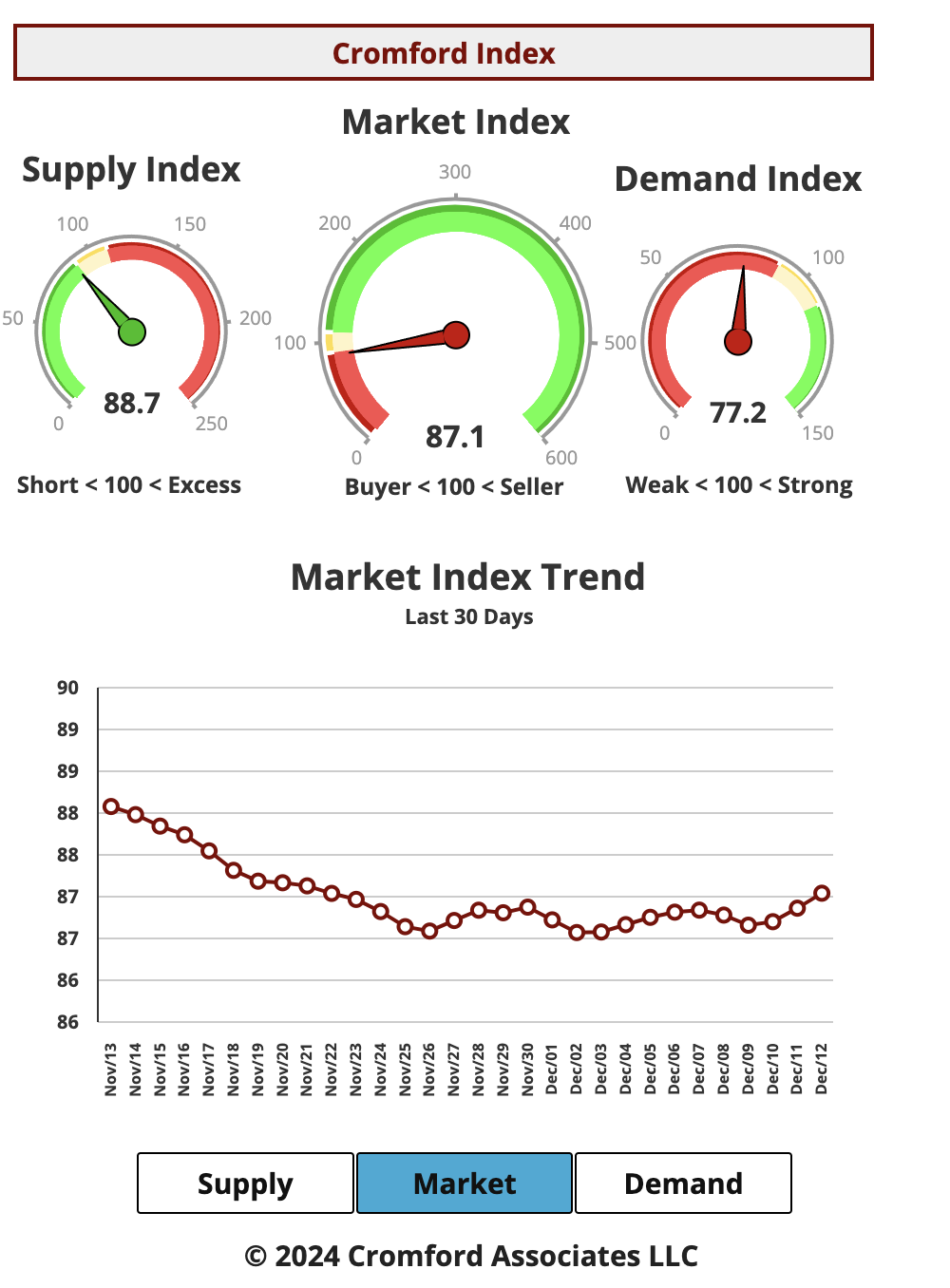
The overall market remains relatively balanced, with both the Cromford® Demand Index and Supply Index showing signs of life. The Demand Index has crept up from a low of 73.1 in September to 77, suggesting that demand is picking up slightly. On the other hand, the Supply Index has risen from 75 to 89, giving buyers more options to choose from but also increasing competition among sellers.

Despite a stable market overall, the luxury housing market remains more buoyant. The higher end of the market is seeing more activity, driven in part by the surge in stock and crypto market gains. These high-end properties are helping to support the $/SF numbers in the Phoenix area, especially for pending and under-contract listings.

Outlook for 2025: Looking Ahead

Looking into 2025, buyers are likely hoping for a dip in mortgage rates to make purchasing a home more affordable. While the market has shown signs of recovery, the mainstream housing sector remains cautious, with many waiting for more favorable mortgage conditions.

For sellers, it’s important to understand that competition is increasing, and pricing pressure is subdued for homes outside of the luxury market. Homes that are priced competitively and marketed well will likely see more success in this climate.

Conclusion: A Mixed Yet Stable Market

The Phoenix housing market is showing resilience as we close out 2024. While inventory is increasing, demand is holding steady, and prices are remaining stable. For buyers, there are more options available, though competition remains fierce. Sellers may face more competition but still have an opportunity to capitalize on the increased inventory.

As we look ahead to 2025, the Phoenix housing market will likely see more signs of life, but it will be important for buyers, sellers, and investors to stay attuned to fluctuations in interest rates and overall economic conditions.


The Cromford Report provides the Data for this report. 

Dec. 2, 2024

How to Find How Much a Home Sold For?

How to Find How Much a Home Sold For?

How to Find How Much a Home Sold For?

If you're curious about how much a home in your neighborhood recently sold for, there are several ways to gather this information. Knowing recent sales prices in your area can give you valuable insight into the local real estate market, whether you're a prospective buyer, a seller, or simply interested in understanding property values.

In this blog post, we'll walk you through the different methods of finding home sale prices and how Jonathan Baer, Realtor at Dominion Group Properties can assist you in accessing this important information. We’ll also show you how our website, www.dgpaz.com, can be your go-to tool for real estate market insights in your neighborhood.

Methods to Find Out How Much a Home Sold For

1. Online Property Search Tools

There are several online platforms where you can search for sold home prices. Websites like Zillow, Redfin, and Realtor.com typically list both current and past sales data. These platforms offer user-friendly tools that allow you to search by address, neighborhood, or ZIP code, and often show the sale price of homes that have recently sold.

However, these tools are not always 100% accurate. Sale prices can sometimes be outdated, and some private sales or off-market transactions might not be included. For the most reliable and up-to-date information, it’s always a good idea to reach out to a local Realtor who has access to more accurate MLS (Multiple Listing Service) data.

2. MLS Access

The Multiple Listing Service (MLS) is a comprehensive database used by Realtors to share information about homes for sale, under contract, and recently sold. The MLS is often the most accurate source of information about a home’s sale price.

Since public access to the MLS is limited, Jonathan Baer, Realtor, has direct access to this tool and can provide you with the most accurate and current data on home sales in your neighborhood. By working with a professional Realtor, you can get precise details about recent transactions that might not be listed on public platforms.

3. County Records and Public Databases

Another option for finding out how much a home sold for is checking county property records. Every home sale is recorded at the county level, and these records are public. While the process of searching through these records can be tedious, they contain the official sale price of the property. Many counties also have online portals where you can search for recent sales by address or parcel number.

This method can be time-consuming and might not be as user-friendly as other tools, but it’s a reliable way to find accurate sale prices.

4. Contacting a Real Estate Agent

One of the best ways to get reliable and up-to-date information on home sales in your neighborhood is to contact a local real estate agent. A real estate agent, like Jonathan Baer, can access MLS data, which provides accurate sale prices for homes that have recently sold in your area.

As an expert in the local market, Jonathan Baer at Dominion Group Properties can offer valuable insights into property values, recent market trends, and what you can expect when buying or selling a home. Having an experienced Realtor on your side ensures you’re getting the best, most accurate information available.

How Jonathan Baer, Realtor and www.dgpaz.com Can Help You

At Dominion Group Properties, we pride ourselves on providing personalized, expert service to our clients. Whether you're buying, selling, or just curious about the real estate market in your area, Jonathan Baer is here to guide you every step of the way.

Here's how we can help you find out how much a home sold for:

  • Access to MLS Data: As an experienced Realtor, Jonathan Baer has direct access to the MLS, which gives him the ability to provide you with the most accurate, up-to-date sale prices for homes in your neighborhood.
  • Comprehensive Market Insights: At www.dgpaz.com, we offer tools that provide valuable information about the real estate market in Phoenix and beyond. Whether you're looking for historical sales data, recent market trends, or specific details about homes sold in your neighborhood, we make it easy to get the information you need.
  • Personalized Service: If you have specific questions about home values in your neighborhood or are considering buying or selling a home, Jonathan Baer is ready to assist. His deep knowledge of the local market allows him to provide tailored advice to help you make informed decisions.
  • Free Home Valuation: Interested in finding out the current market value of your home? Jonathan Baer offers free home valuations for homeowners, providing insights into how much your property could sell for based on current market conditions and recent sales in your area.

Why Use www.dgpaz.com?

At www.dgpaz.com, we are dedicated to providing real-time, relevant information to help you navigate the Arizona real estate market. Our website offers easy access to property listings, market trends, and home sale data. Whether you're a buyer, seller, or just interested in learning more about real estate in your neighborhood, you can count on www.dgpaz.com as a valuable resource.

Conclusion

Finding out how much a home sold for in your area can be done through a variety of methods, but for the most accurate, up-to-date information, working with a knowledgeable Realtor like Jonathan Baer is the best choice. At Dominion Group Properties, we provide our clients with access to the latest MLS data, real estate trends, and market insights to ensure you have all the information you need to make informed decisions.

If you're interested in learning more about home sales in your area or need assistance with buying or selling a home, Jonathan Baer at Dominion Group Properties is here to help. Visit www.dgpaz.com or contact us today to get started!

Dec. 2, 2024

Can You Sell a Home with a Reverse Mortgage?

Can You Sell a Home with a Reverse Mortgage?

Can You Sell a Home with a Reverse Mortgage?

If you’re considering selling your home but currently have a reverse mortgage, you might be wondering how this will impact your ability to sell. The good news is that yes, you can sell a home with a reverse mortgage, but there are several important factors to understand. As an experienced Realtor, Jonathan Baer at Dominion Group Properties, I’m here to guide you through the process and ensure you have all the information you need to make informed decisions about your home sale.

What Is a Reverse Mortgage?

A reverse mortgage is a loan option available to homeowners aged 62 and older, allowing them to convert a portion of their home’s equity into loan proceeds. Unlike traditional mortgages, with a reverse mortgage, you don’t have to make monthly payments. Instead, the loan is repaid when the homeowner sells the home, moves out, or passes away. The amount owed on the loan can accumulate over time, depending on the interest rate and the amount borrowed.

Selling a Home with a Reverse Mortgage

Selling a home that has a reverse mortgage works similarly to selling any other home. However, there are a few additional steps and considerations to keep in mind:

  1. Loan Payoff: When you sell your home with a reverse mortgage, the proceeds from the sale are used to pay off the loan balance. This means you’ll need to ensure the sale price of your home is sufficient to cover the loan balance, including any accumulated interest and fees. If the sale price exceeds the amount owed on the reverse mortgage, you keep the remaining balance.

  2. Loan Balance May Exceed Sale Price: In some cases, the balance on the reverse mortgage may exceed the sale price of the home. If this happens, you’re not required to pay the difference out of pocket. Reverse mortgages are non-recourse loans, which means the lender cannot seek repayment beyond the value of the home. The lender will absorb the loss if the sale proceeds are insufficient to cover the loan.

  3. Timeframe and Process: Selling a home with a reverse mortgage involves contacting the lender to inform them of your intent to sell. The lender will need to approve the sale and provide a payoff statement, which outlines the exact amount needed to satisfy the reverse mortgage loan. Once the sale is complete, the lender is paid off, and any remaining proceeds are yours.

  4. Tax Implications: The proceeds from the sale of a home with a reverse mortgage are generally not taxable, as they are considered loan repayment. However, it’s always a good idea to consult with a tax professional to understand any specific tax implications in your situation.

Why Work with Jonathan Baer, Realtor, at Dominion Group Properties?

Selling a home with a reverse mortgage can seem complicated, but it doesn’t have to be. As an experienced Realtor with Dominion Group Properties, Jonathan Baer can help you navigate the process smoothly. I have a deep understanding of the Arizona real estate market and can guide you through every step, from listing your home to negotiating the sale and working with your lender.

Here’s how I can help:

  • Expert Negotiation: I will ensure you receive the best possible offer for your home, maximizing the proceeds from the sale.
  • Streamlined Process: I’ll work with your reverse mortgage lender to ensure everything is in order for a smooth and timely sale.
  • Client-Focused Approach: My team and I prioritize your needs, offering personalized service and advice to help you make the right decisions.

Things to Keep in Mind Before Selling a Home with a Reverse Mortgage

Before you move forward with selling your home with a reverse mortgage, consider the following:

  • Assess Your Financial Situation: Make sure the sale price of your home will cover the reverse mortgage balance. If not, determine if this will impact your plans for moving or buying a new property.
  • Plan for Moving: Selling a home with a reverse mortgage means you’ll need to find a new place to live, so start planning your next steps early.
  • Consult with Professionals: Work with a Realtor like Jonathan Baer, as well as a financial advisor or attorney, to ensure the process is smooth and that you fully understand your options.

Conclusion

In conclusion, yes, you can sell a home with a reverse mortgage, but it’s important to fully understand how the reverse mortgage works and how it will impact the sale of your property. Whether you’re looking to downsize, relocate, or move to a different home, Jonathan Baer at Dominion Group Properties is here to provide expert guidance and make the process easier for you.

If you’re ready to sell your home with a reverse mortgage, reach out to Jonathan Baer, Realtor at Dominion Group Properties today. Let me help you navigate the sale, ensuring you achieve your real estate goals with ease.

Nov. 20, 2024

Why You Make More Money Selling With Jonathan Baer and Dominion Group Properties

Why you make more money selling with Jonathan Baer


Why You Make More Money Selling With Jonathan Baer and Dominion Group Properties

While selling your home without a realtor may seem like a way to save money on commission fees, the reality is that you may end up making less money in the long run. Here’s why Jonathan Baer, Realtor, and Dominion Group Properties can help you make more money when selling your home:

  1. Access to the MLS and Wide Marketing Reach When you work with Jonathan Baer, your home will be listed on the MLS, gaining exposure to thousands of buyers and real estate agents. This increased visibility means more potential buyers will see your property, leading to more showings, better offers, and potentially a quicker sale at a higher price.

  2. Accurate Pricing for Maximum Profit Setting the right price is essential, and Jonathan Baer has the local knowledge and expertise to price your home correctly. By analyzing comparable homes in your area, recent sales data, and current market trends, Jonathan can help you price your home competitively while still maximizing your sale price.

  3. Professional Negotiation Skills With years of experience in real estate, Jonathan Baer is a skilled negotiator who can help you secure the best possible deal. Whether it's handling offers, counteroffers, or dealing with buyer contingencies, Jonathan ensures that your interests are protected and that you get the most money out of your sale.

  4. Streamlined Process Selling a home is complicated, with paperwork, inspections, and deadlines. Jonathan Baer and Dominion Group Properties handle all the details for you, ensuring that the process is smooth and stress-free. With an experienced agent managing the logistics, you can focus on your next steps, knowing everything is taken care of.

  5. Less Time on the Market Homes listed by professional agents tend to sell faster than FSBO homes. With Dominion Group Properties, your home will be marketed to the right buyers, leading to a quicker sale and fewer price reductions. A quicker sale means you get your money faster and can move on to your next chapter.


Get a Free Home Evaluation Today

If you’re considering selling your home, whether with or without a realtor, it’s essential to know its current market value. Jonathan Baer, Realtor, and Dominion Group Properties offer free home evaluations to help you understand the worth of your property and give you a competitive edge when you list it for sale. Don’t leave money on the table – get an expert evaluation today.

Contact Jonathan Baer at Dominion Group Properties to schedule your free home evaluation and start the process of selling your home with confidence.


Conclusion

Selling your home without a realtor may sound tempting because of the potential savings on commission fees, but it’s important to weigh the pros and cons. While you may save on commission costs, you could end up with a lower sale price, a longer time on the market, and more stress in handling the sale on your own. Ultimately, working with a skilled Realtor like Jonathan Baer at Dominion Group Properties provides you with the expertise, market knowledge, and negotiation skills needed to sell your home for the highest possible price.

Get in touch with Jonathan Baer today to schedule your free home evaluation and start your journey toward a successful sale!

Outside Source on Why Selling with a Realtor Makes Sellers More Money

Nov. 20, 2024

Capital Gains Tax for Seniors Selling Their Homes: What You Need to Know

Capital Gains Tax for Seniors Selling Their Homes: What You Need to Know

Capital Gains Tax for Seniors Selling Their Homes: What You Need to Know

As a senior selling your home, you may have questions about how capital gains tax applies to your sale. Capital gains tax is a tax on the profit made from selling an asset like real estate, and it’s essential for homeowners to understand how this tax works, especially if they’ve lived in the property for a long time. This blog will break down the basics of capital gains tax for seniors selling their homes and provide key information to help you navigate this aspect of the sale.

What is Capital Gains Tax?

Capital gains tax is a tax on the profit made from the sale of an asset such as real estate, stocks, or other investments. When you sell your property for more than you bought it, the difference between the sale price and the original purchase price is your profit, or capital gain. This gain is subject to taxation by the IRS. The amount of tax you owe depends on various factors, including how long you’ve owned the property, your income level, and whether you qualify for certain exemptions.

How Does Capital Gains Tax Apply to Seniors?

For seniors selling their homes, the good news is that the IRS offers significant tax breaks and exemptions that can reduce or eliminate capital gains tax in many cases. In particular, Section 121 of the Internal Revenue Code allows homeowners to exclude a portion of the capital gain from the sale of their primary residence, under certain conditions. This is especially beneficial for seniors, many of whom may have owned their homes for decades.

The Home Sale Exclusion: What You Need to Know

Under the Home Sale Exclusion, individuals can exclude up to $250,000 of capital gains from the sale of their primary residence, while married couples can exclude up to $500,000. This means that if you are selling your home for a profit, you may not owe any capital gains tax at all, as long as your profit falls within these exclusion limits.

To qualify for the Home Sale Exclusion, you must meet the following requirements:

  1. Ownership: You must have owned the home for at least two out of the last five years before the sale. This is known as the ownership test.
  2. Use: The home must have been your primary residence for at least two out of the last five years before the sale. This is the use test.
  3. Exclusion Limitation: You can only claim the exclusion once every two years. This means that if you’ve already claimed the exclusion in the past two years, you cannot use it again.

If you meet these criteria, you may be eligible to exclude the first $250,000 (or $500,000 if married) of your capital gains from taxes.

What if Your Gain Exceeds the Exclusion Limit?

If your capital gain exceeds the exclusion limit of $250,000 (or $500,000 for married couples), the portion of the gain above this limit is subject to capital gains tax. The tax rate on the excess gain depends on several factors, including how long you’ve owned the home and your overall income.

  1. Short-Term vs. Long-Term Capital Gains: If you’ve owned your home for more than one year, any capital gain is considered a long-term capital gain. Long-term capital gains are generally taxed at a lower rate than short-term gains, which apply to assets held for less than one year. The long-term capital gains tax rate typically ranges from 0% to 20%, depending on your income level.

  2. Income Level and Tax Rate: The IRS uses a tiered tax system for long-term capital gains. For most taxpayers, the capital gains tax rate is 15%. However, if your income is lower, you may qualify for a 0% tax rate, and if your income is high enough, you may be taxed at the 20% rate.

To determine how much you might owe, you will need to calculate your capital gain (the difference between your sale price and your original purchase price, adjusted for any improvements or selling costs) and then apply the appropriate tax rate.

How Improvements and Selling Costs Affect Capital Gains

The cost basis of your home plays a crucial role in determining your capital gain and, therefore, your tax liability. Your cost basis is generally the amount you paid for the home when you bought it, plus any significant improvements you made to the property. Selling costs such as real estate agent commissions and closing fees can also be added to the cost basis, effectively lowering the taxable capital gain.

For example, if you bought your home for $150,000, made $50,000 worth of improvements, and sold it for $400,000, your capital gain would be calculated as:

  • Sale price: $400,000
  • Minus cost basis: $150,000 (purchase price) + $50,000 (improvements) = $200,000
  • Capital gain: $400,000 - $200,000 = $200,000

In this scenario, you would not owe any capital gains tax, as the $200,000 gain is below the $250,000 exclusion limit for a single person.

What About Seniors Who Don’t Meet the 2-Out-of-5-Year Rule?

If you don’t meet the 2-out-of-5-year rule for the Home Sale Exclusion, you may still qualify for a partial exclusion in certain circumstances. This can happen if:

  • You sell your home due to a change in health or other unforeseen circumstances (such as a job relocation or divorce).
  • You meet other specific exceptions outlined by the IRS.

In such cases, the exclusion is prorated based on the length of time you lived in the home during the five-year period, which could still result in significant tax savings.

Other Tax Considerations for Seniors

In addition to capital gains tax, seniors selling their homes should be aware of other potential tax implications. These may include:

  • State Taxes: Some states have their own capital gains taxes, which can affect your overall tax liability. Be sure to check with a tax professional in your state for details on how state taxes may apply.
  • Medicare Tax: High-income individuals may be subject to an additional 3.8% net investment income tax on capital gains, which applies to single filers with modified adjusted gross income over $200,000, or married couples filing jointly with income over $250,000.

How Jonathan Baer and Dominion Group Properties Can Help

When selling your home, especially as a senior, it’s essential to have an experienced Realtor on your side who understands the complexities of the real estate market and can guide you through the process. Jonathan Baer, Realtor, and Dominion Group Properties have extensive experience working with clients who are looking to downsize, relocate, or sell their homes later in life. We can help you find the right property, navigate the sale, and ensure you’re aware of any potential tax implications during the process.

We take pride in offering our clients comprehensive advice and support, helping you make the best financial decisions when selling your home.

Conclusion

Selling your home as a senior offers unique advantages when it comes to capital gains tax. The Home Sale Exclusion provides significant tax relief for many seniors, allowing you to exclude up to $250,000 ($500,000 for married couples) of the capital gain from your home sale. However, it’s important to understand the eligibility requirements, how improvements and selling costs affect your tax liability, and any additional considerations like state taxes and Medicare surtaxes.

If you’re a senior selling your home and looking for expert guidance, Jonathan Baer, Realtor, and Dominion Group Properties are here to help. Contact us today for a consultation, and let’s ensure that your home sale is both financially rewarding and hassle-free.


Information from the IRS

AARP: Capital Gains Tax for Seniors

Nov. 19, 2024

how to find unlisted homes for sale

How to Find Off Market Listings

How to Find Unlisted Homes for Sale

In the competitive real estate market, finding the perfect home often means looking beyond the typical listings that appear on MLS or real estate websites. Unlisted properties, often referred to as "pocket listings" or "off-market listings," can provide prospective buyers with unique opportunities to purchase homes before they hit the open market. Jonathan Baer, Realtor at Dominion Group Properties, shares expert insights on how to effectively find unlisted homes for sale. Here’s your guide to uncovering these hidden gems.

Understand What Makes a Home Unlisted

Unlisted homes for sale are properties that sellers prefer not to publicly advertise on the multiple listing services (MLS). There are several reasons why a seller might choose to keep their home unlisted, including privacy concerns, testing the market, or targeting a specific buyer demographic. Understanding the seller’s motivations can be key to accessing these properties.

Leveraging Professional Networks

Connect with Local Realtors

The most effective way to find unlisted homes is through connections with local real estate professionals. Realtors like Jonathan Baer often have extensive networks and knowledge of potential off-market properties. They may have access to exclusive listings before they are advertised to the general public or know homeowners who are thinking about selling but haven't listed their property yet.

Utilize Realtor Databases

Experienced agents have access to not just MLS but also realtor-exclusive databases and networks where off-market properties might be listed. By working with a realtor, you can tap into these resources and find listings that are not available through traditional channels.

Networking and Building Relationships

Engage in Local Community Events

Sometimes, the best way to learn about unlisted homes is to be actively involved in the community where you want to buy. Attend local events, join neighborhood groups, and make connections with local residents. Often, news of homes for sale spreads through word of mouth in tight-knit communities.

Develop Relationships with Estate Attorneys and Financial Advisors

Professionals who deal with estate planning, divorces, and financial advisories often know about real estate transactions before they become public. Establishing relationships with these professionals can provide you with a heads-up on properties that may soon be available for sale.

Direct Outreach

Contact Homeowners Directly

If you have a particular neighborhood or street in mind, consider direct outreach. Sending a well-crafted, respectful letter expressing your interest in purchasing a home in the area can sometimes lead to opportunities that are not listed publicly.

Look for FSBO (For Sale By Owner) Properties

Some homeowners prefer to sell their homes without the help of a realtor to avoid commission fees. These listings might not be as widely advertised, so keeping an eye on local classifieds, community boards, or online marketplaces can reveal potential unlisted homes.

Online and Social Media Strategies

Monitor Real Estate Platforms

While most unlisted homes do not appear in traditional listings, some might be subtly advertised through real estate platforms or social media. Keep an eye on real estate Facebook groups, LinkedIn, and even Instagram, where agents and sellers might post teasers or soft listings.

Set Up Alerts

Use online real estate tools to set up alerts for your desired area. Even though the home is unlisted, related activities like a change in the property’s status might trigger an alert.

Working with Jonathan Baer at Dominion Group Properties

Finding an unlisted home requires patience, diligence, and the right connections. Working with Jonathan Baer and Dominion Group Properties provides you with the insider access needed to navigate the hidden market of unlisted homes. Jonathan’s expertise and deep local connections can significantly enhance your chances of finding and successfully purchasing an off-market home.

Whether you're a first-time homebuyer or looking to expand your real estate portfolio, understanding how to access unlisted properties can give you a significant advantage in finding your dream home. Contact Jonathan Baer today to learn more about exclusive listings and start your journey toward buying an unlisted home.

Contact Jonathan Baer

With the right strategies and the help of a well-connected realtor, your path to finding the perfect unlisted home is just a consultation away. Discover the benefits of stepping beyond traditional listings with Jonathan Baer and Dominion Group Properties at your side.

Nov. 18, 2024

What is an Open Listing in Real Estate?


What is an Open Listing

What is an Open Listing in Real Estate?

In the world of real estate, there are several ways property owners can choose to sell their homes, each with its unique processes and potential benefits. One such method is the open listing, a less common but intriguing option for sellers. This blog explores what an open listing entails, how it differs from more traditional selling methods, and the advantages and disadvantages it presents to sellers.

Understanding Open Listings

An open listing in real estate refers to an agreement where a property owner retains the right to sell their home or property themselves or through multiple real estate agents concurrently. Unlike exclusive right-to-sell listings, where one agent or broker has the sole authority to market and sell the property, open listings allow for a broader range of marketing avenues.

Key Features of Open Listings:

  • Multiple Agents: Homeowners can engage several agents to market their property simultaneously.
  • Non-exclusive: No single agent has exclusive rights to sell the property.
  • Owner Flexibility: The owner may also find a buyer independently without owing commission to any agents.

How Does an Open Listing Work?

In an open listing, the seller signs an agreement with multiple real estate agents. Each agent is free to bring potential buyers to view the property. If one of the agents succeeds in selling the home, they receive a commission for their efforts. However, if the seller finds a buyer independently, no commission is paid to any agents.

This type of listing is typically less formal and may not require a standard contract like exclusive listings do. Often, the terms are agreed upon with a simple handshake or a less formal agreement, specifying that only the agent who brings the buyer will get paid.

Advantages of Open Listings

Open listings can be particularly attractive for sellers who wish to maintain control over the selling process. Here are a few advantages:

  • Flexibility and Control: Sellers can try to sell the property on their own while also leveraging the networks of multiple agents.
  • Lower Costs: If the seller finds a buyer independently, they can avoid paying a commission, potentially saving thousands of dollars.
  • Competition Among Agents: Multiple agents working to sell the same property might increase effort and creativity in marketing the property.

Disadvantages of Open Listings

While open listings can offer certain benefits, they also come with drawbacks that might make them less appealing:

  • Less Agent Motivation: Agents might be less motivated to invest time and resources in marketing the property since the arrangement does not guarantee a commission.
  • Limited Marketing: Agents typically prioritize exclusive listings where the return on their investment is more certain. As a result, open listings might receive less marketing exposure.
  • Complex Coordination: Managing communications and showings with multiple agents can be cumbersome and confusing for both the seller and potential buyers.

Is an Open Listing Right for You?

Choosing whether to go with an open listing largely depends on your specific circumstances and goals. If you are in a rush to sell, prefer more control over the process, or enjoy actively participating in the sale, an open listing might be suitable. However, if you seek the full-service marketing that an exclusive listing agreement can offer, you might want to explore other options.

Conclusion

Open listings offer a unique set of benefits and challenges that may not be for every seller. Before deciding on this type of listing, it’s crucial to weigh the potential for higher flexibility and lower costs against the possible drawbacks of less agent commitment and marketing support. Consulting with a knowledgeable real estate professional can help clarify whether an open listing is the best route for your property sale.


Jonathan Baer Homes.com Profile

Nov. 13, 2024

Open Listing Definition in Real Estate: Why an Exclusive Listing with Jonathan Baer Makes You More Money

Open Listing Definition

Open Listing Definition in Real Estate: Why an Exclusive Listing with Jonathan Baer Makes You More Money

In real estate, understanding the different types of listings is essential when selling your home. Whether you're a seasoned seller or new to the market, the right listing agreement can make a significant impact on how quickly you sell your home, the price you get for it, and how much you pay in commissions. One such listing type is the open listing, which is a less common but still important option to consider. However, while open listings may seem appealing due to their flexibility, an exclusive listing with a professional real estate agent like Jonathan Baer, Realtor at Dominion Group Properties, can ultimately make you more money and ensure a smoother, more successful sale.

In this blog, we’ll take a deep dive into the open listing definition, how it works, the pros and cons of this listing type, and why, in most cases, an exclusive listing with Jonathan Baer can lead to a higher sale price, quicker sale, and more profit for you.


What Is an Open Listing in Real Estate?

An open listing is a type of real estate listing agreement in which a homeowner allows multiple real estate agents or brokers to market and sell their property. Unlike an exclusive listing, where only one agent is given the rights to sell the home, an open listing is non-exclusive, meaning the homeowner can work with several agents simultaneously and can also sell the property themselves without owing a commission.

Here’s how an open listing works:

  1. Multiple Agents Involved: The homeowner can list the property with multiple agents and brokers, but no one agent has exclusive rights to sell the home.
  2. Commission Only Paid on Sale: The agent who brings a buyer to the property receives the commission (usually a percentage of the sale price) if the property sells. However, if the homeowner sells the property independently, no commission is owed to any agent.
  3. No Marketing Guarantee: Since the listing is open, the agents may be less motivated to market the property aggressively because they may not be the one who ends up making the sale.

Pros of an Open Listing

While open listings are less common than exclusive listings, they do have some advantages:

  1. Flexibility for Homeowners: Homeowners can list with multiple agents, which gives them flexibility and the potential to reach more buyers. There’s no need to commit to one agent, and they are free to sell the home on their own if they find a buyer.
  2. Lower Commission Costs: Since only the agent who sells the property is entitled to a commission, homeowners may think they’ll save money by having multiple agents compete for the sale. This could mean a lower total commission fee.
  3. No Exclusive Commitment: Homeowners are not bound to a single agent, which might be appealing to those who want to avoid a long-term commitment to a realtor.

Cons of an Open Listing

While open listings may seem appealing due to their flexibility and potential cost savings, there are significant drawbacks:

  1. Lack of Motivation from Agents: Since agents do not have exclusivity, they may not put as much effort into marketing your property, especially if they know there are several other agents working with you. Without the guarantee of a commission, agents might not prioritize your property, leading to limited exposure.
  2. Limited Marketing and Exposure: Open listings typically do not get the same marketing resources as exclusive listings. Agents are less likely to invest in professional photography, staging, or advertising because they are unsure if they will be compensated for their efforts.
  3. Inconsistent Communication: With multiple agents involved, it can become difficult to coordinate showings, offers, and communication. This can lead to confusion, missed opportunities, or conflicting advice from agents.
  4. Lower Sale Price: The lack of a dedicated, motivated agent working on your behalf can result in a lower sale price. If agents are not properly marketing or showcasing the home, it may sit on the market longer, which can lead to price reductions and ultimately a lower sale price than what you could have achieved with an exclusive listing.

Exclusive Listing: The Best Option for Sellers

An exclusive listing agreement gives one real estate agent the exclusive right to represent the homeowner in selling the property. This means that the agent has the responsibility to market and sell the property, and the homeowner is obligated to pay the agent a commission if the property is sold, even if the homeowner finds a buyer themselves.

Here’s why an exclusive listing with Jonathan Baer, Realtor at Dominion Group Properties, can help you make more money when selling your home:

1. Professional Marketing and Exposure

When you work with Jonathan Baer, you get the full benefit of professional marketing, which includes:

  • Listing on the MLS: One of the most significant advantages of an exclusive listing is that your home will be listed on the Multiple Listing Service (MLS). The MLS is the largest database of properties for sale, viewed by thousands of buyers and real estate agents. This increased exposure leads to more potential buyers seeing your home and more showings.
  • Professional Photos and Staging: Jonathan Baer offers professional photography and home staging services that make your home look its best. Homes that are professionally staged and photographed sell faster and for more money because they appeal to a broader range of buyers.
  • Targeted Marketing Campaigns: With an exclusive listing, you get tailored marketing strategies, including digital advertising, email campaigns, and social media promotion, ensuring your home reaches the right audience.

2. Full Attention and Dedication

When you choose to list exclusively with Jonathan Baer, you get a dedicated professional who is committed to the success of your sale. Unlike open listings, where agents may be less motivated, Jonathan Baer works tirelessly to ensure that your home is seen by as many potential buyers as possible. This full commitment means:

  • Personalized Service: Jonathan will guide you through every step of the selling process, from setting the right price to negotiating offers and closing the deal.
  • Better Negotiation: Having one agent representing your interests means you benefit from their negotiation expertise. Jonathan Baer is skilled at getting you the best possible offer and ensuring you don’t leave money on the table.
  • Efficient Communication: With just one agent handling all communications, you will have streamlined, clear updates and feedback throughout the process, making the sale much easier to manage.

3. Increased Sale Price

Homes sold with an exclusive listing often sell for a higher price than homes listed with an open listing. Here’s why:

  • Stronger Negotiation Power: Jonathan Baer knows how to negotiate and can help you get the best possible price for your home.
  • Strategic Pricing: Jonathan will use his knowledge of the local market to set a competitive, attractive price for your home, ensuring it sells quickly without leaving money on the table.

4. Reduced Time on the Market

An exclusive listing typically leads to a quicker sale. Homes that are professionally marketed and priced correctly from the start generally spend less time on the market, which benefits sellers in multiple ways:

  • More Serious Buyers: When your home is marketed effectively, you attract buyers who are serious and ready to make an offer.
  • Fewer Price Reductions: An exclusive listing ensures your home is properly priced and marketed from the beginning, meaning you're less likely to need price reductions that can harm your sale price and extend your time on the market.

Why Choose Jonathan Baer and Dominion Group Properties?

Choosing an experienced real estate agent like Jonathan Baer at Dominion Group Properties ensures that you get the expertise, dedication, and marketing power that are critical to selling your home for the highest possible price. Here’s why working with Jonathan Baer is the best decision for your sale:

  • Local Market Expertise: Jonathan Baer has an in-depth understanding of the local market, trends, and pricing, ensuring that your home is positioned to attract the right buyers at the right price.
  • Comprehensive Services: From staging to listing, negotiations to closing, Jonathan provides full-service support that takes the stress out of selling your home.
  • Proven Results: With years of experience and a track record of success, Jonathan Baer and Dominion Group Properties have helped countless clients sell their homes quickly and at top dollar.

Get Your Free Home Evaluation Today

If you’re ready to sell your home and want to know its current market value, contact Jonathan Baer, Realtor, for a free home evaluation. Knowing the value of your home is the first step toward making an informed decision about selling. Jonathan Baer will provide you with a comprehensive market analysis to help you understand the best price for your property.

Reach out today to schedule your free home evaluation, and let Jonathan Baer and Dominion Group Properties guide you through a successful home sale!


Conclusion

While selling your home with an open listing may seem like a way to save money on commission fees, it often leads to a lower sale price, longer time on the market, and less professional support. An exclusive listing with Jonathan Baer, Realtor, and Dominion Group Properties offers many advantages, including professional marketing, full attention to your sale, and stronger negotiation power, all of which lead to a quicker sale and higher sale price.

For a smooth, successful sale, contact Jonathan Baer today to schedule your free home evaluation and start your journey toward selling your home for top dollar.

Nov. 12, 2024

Navigating the Phoenix Housing Market: November 2024


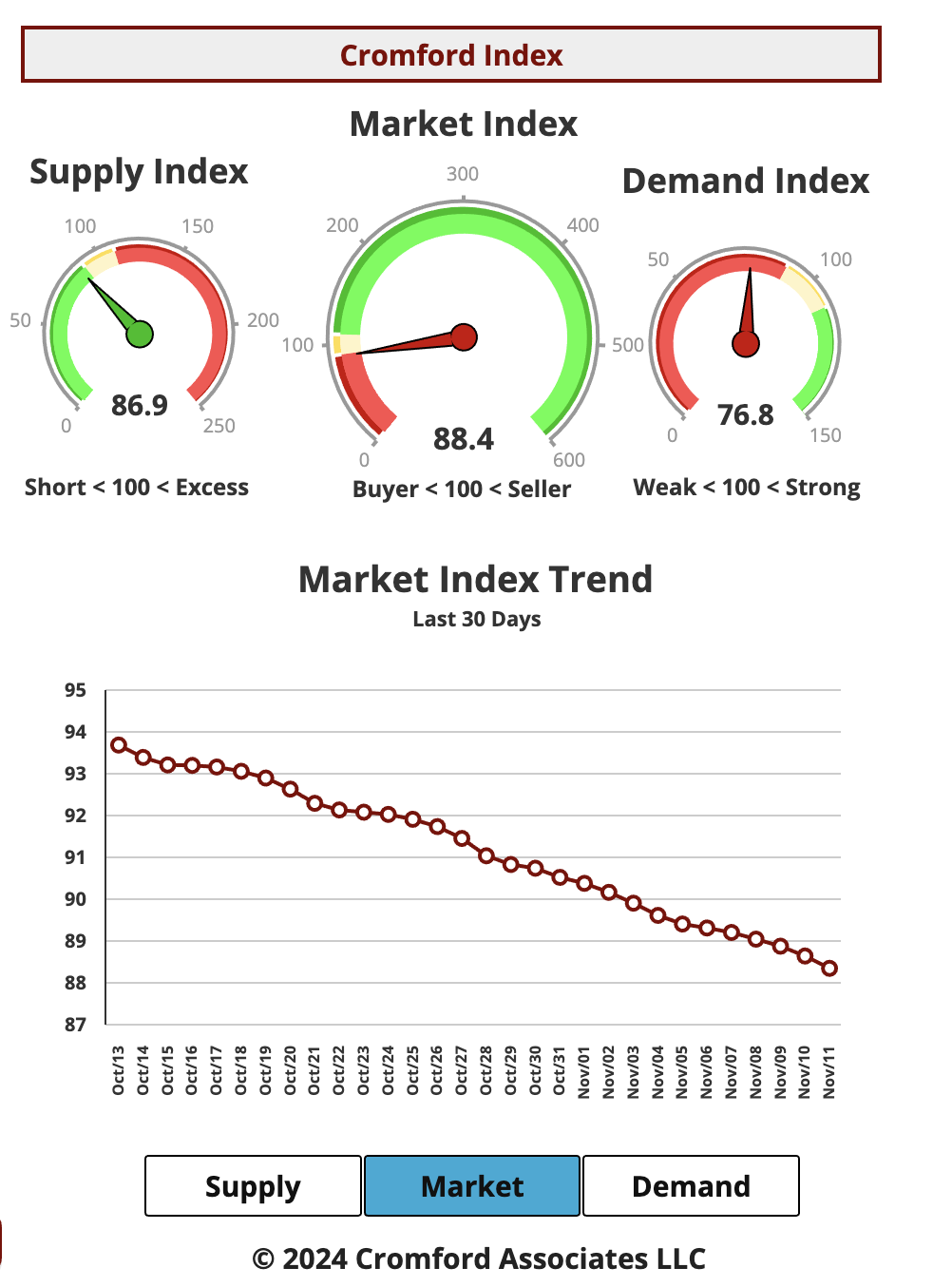
Cromford Index November 11 2024

Navigating the Phoenix Housing Market: November 2024

As we step into November 2024, the Phoenix real estate landscape shows a distinct shift, making it a favorable market for buyers. The latest statistics from the Arizona Regional Multiple Listing Service (ARMLS) reveal intriguing trends when comparing current data with last year’s figures.

Surging Inventory Levels

As of November 1, 2024, active listings (excluding UCB & CCBS) have surged by 40% to 21,368 from 15,247 a year ago. Including UCB and CCBS, the numbers are up by 39% year-over-year, totaling 24,127 listings. This substantial increase in available properties gives buyers a variety of choices, enhancing their negotiating power.

Sales Dynamics

The market has seen a 6.8% increase in pending listings from last year, indicating a steady interest in buying despite the higher inventory. However, under-contract listings have seen a slight retreat, down 4.5% from last month. This mixed signal suggests that while buyer interest is there, the surge in listings is affecting the pace of contracts being signed.

Monthly sales also rose by 11.9% compared to last year, with 5,826 homes sold. This indicates a robust closure rate, albeit influenced by an additional working day in October 2024 compared to the same month in 2023. Such statistical nuances highlight the importance of considering working days in monthly comparisons.

Pricing Trends

Despite the higher sales numbers, pricing has experienced a slight dip. The monthly average sales price per square foot has decreased by 1.0% from last year, standing at $290.64. Conversely, the median sales price has seen a rise of 3.4%, reaching $450,000. These conflicting trends underscore a market that is yet to find a consistent pricing direction amidst fluctuating demand and supply.

The Shift to a Buyer's Market

For the first time in over a decade, the Cromford® Market Index (CMI) has dipped below 90, signifying a shift to a buyer's market, a status last seen briefly in late 2022. This is a crucial indicator for both buyers and sellers, as a buyer's market means more room for negotiation on prices and contract terms.

Looking Forward

With the contract ratio also showing a decline from 37 to 32, the market is cooling off. Sellers need to adjust their expectations and strategies in response to the growing leverage that buyers possess. The rising inventory and subtle shifts in pricing dynamics suggest that those looking to purchase homes may find advantageous deals, especially if the CMI remains below the critical 90 threshold.

As we navigate through these changes, both buyers and sellers must stay informed and flexible. The current conditions offer unique opportunities for buyers to negotiate favorable terms, while sellers might need to recalibrate their strategies to align with the evolving market dynamics.

Source: The Cromford Report

Posted in Market Updates